Ensuring the structural stability of commercial and industrial buildings across Venezuela represents a continuous challenge for infrastructure management teams. Whether managing manufacturing plants in Carabobo, administrative complexes in Caracas, or operational facilities in Falcón and Zulia, concrete and steel structures are constantly exposed to environmental weathering, high humidity, and daily operational stress.
Often, minor visual cues that appear to be cosmetic flaws are, in reality, early warning signs of deeper structural compromise. Ignoring these symptoms can lead to large-scale structural failures, putting worker safety at risk and causing severe business disruptions.
This guide breaks down how to identify infrastructure deterioration early using practical, accessible criteria, outlining actionable steps to keep your operating spaces safe and structurally sound.
Structural deterioration does not happen overnight
Buildings undergo a continuous process of settling and wear caused by environmental and mechanical factors. Understanding the root causes of these issues allows asset managers to act long before structural integrity is compromised:
- Moisture exposure and water infiltration: Water is one of the most destructive elements to reinforced concrete. When moisture penetrates surface cracks and reaches embedded rebar, it triggers oxidation. The expanding rust creates internal pressure, leading to spalling, cracking, and eventual concrete failure.
- Dynamic loads and overstressing: Heavy machinery, continuous vibration, or uncalculated changes in floor load utilization introduce mechanical fatigue to beams, slabs, and columns over time.
- Thermal fluctuation and seismic activity: Rapid temperature changes cause thermal expansion and contraction in building materials, while recurring seismic activity tests the displacement capacity and structural absorption of the frame.
Assessing a facility’s structural health is much like scheduling a routine medical checkup. Ignoring a minor symptom for months allows underlying issues to compound into operational emergencies that demand costly, invasive interventions. Taking preventive action early protects both structural assets and capital resources.
Visual warning signs you should never ignore
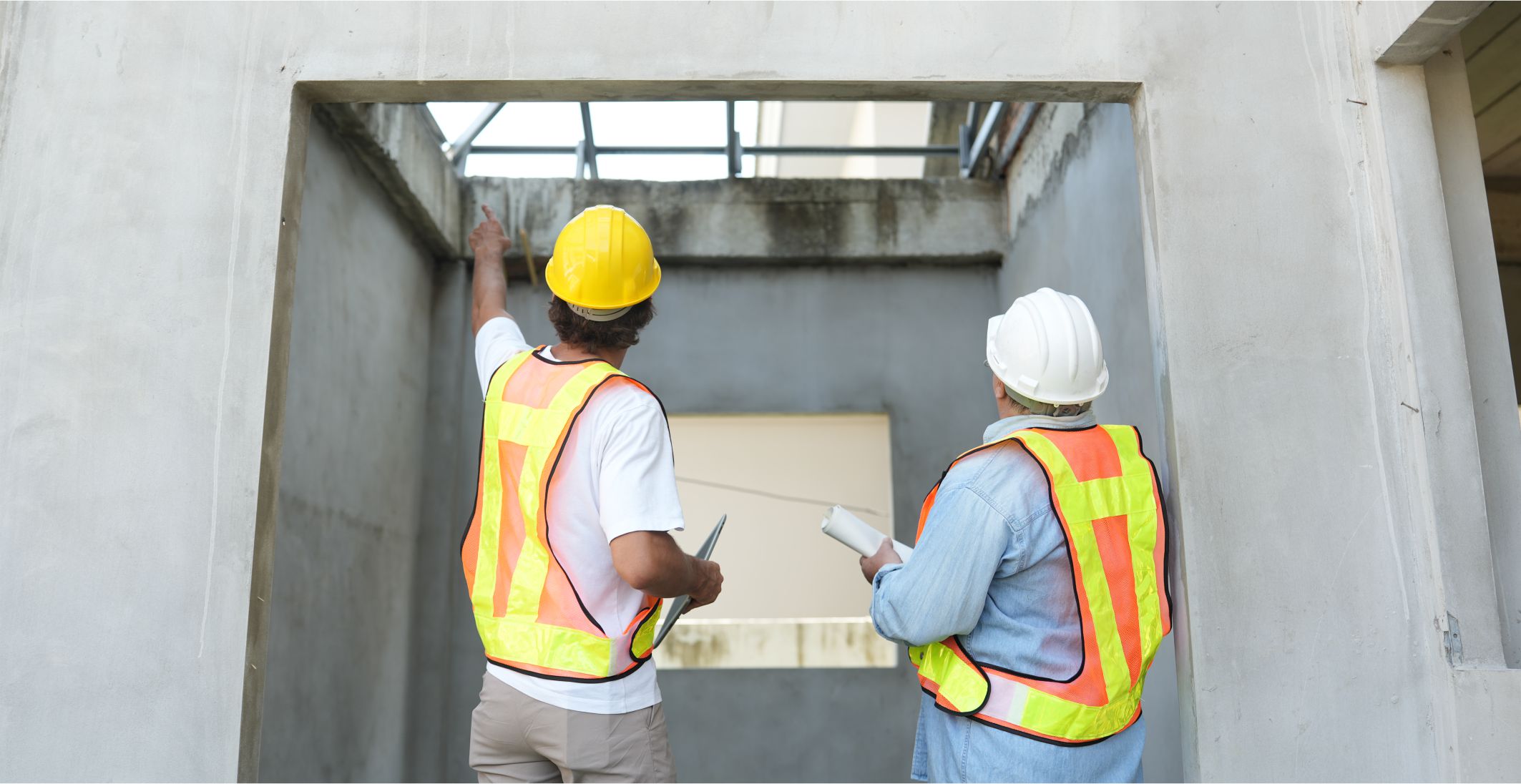
A proactive walkthrough of your facilities enables early threat detection. While identifying initial signs of wear does not require an engineering degree, it does call for clear evaluation criteria on what to look for:
1. Cracking and fracturing
Not all cracks pose the same structural risk, but every crack warrants technical attention:
- Surface hairline cracks in paint or render: Generally caused by thermal expansion or material curing; typically require minor cosmetic repairs.
- Diagonal cracks in load-bearing walls and masonry: Frequently indicate differential foundation settlement or unmitigated stress across wall planes.
- Longitudinal cracks along columns and beams: Signal a major structural alert, as they typically trace the inner steel reinforcement lines currently oxidizing and expanding.
2. Concrete spalling and rust staining
When concrete begins to chip, flake, or spall along edges and slab undersides, the internal steel reinforcement has lost its protective alkaline cover. Brown or orange rust stains bleeding through the concrete surface are definitive proof that embedded rebar is suffering section loss due to active corrosion.
3. Visible deflections and structural deformations
If visual alignment reveals sagging, bowing, or unusual deflection along floor slabs, roof trusses, or structural beams, the frame is signaling mechanical fatigue or live-load stress beyond design capacity. These deformations compromise the structural load distribution established in the original engineering design.
4. Persistent water infiltration and efflorescence
White, powdery mineral deposits or salt crystallization on concrete walls and ceilings represent the residue left behind as infiltrating water evaporates. Beyond destroying architectural finishes, water actively leaches out essential mineral binders that protect embedded steel from rapid corrosion.
Actionable steps for executing a preventive visual inspection
To ensure internal walkthroughs deliver genuine operational value—rather than remaining informal observations—facilities management teams should adopt a structured methodology:
- Definir un cronograma de recorridos: Establish an Inspection Calendar: Schedule comprehensive walkthroughs across critical infrastructure zones (loading bays, roofs, storage warehouses, mechanical rooms) at least twice a year, as well as immediately following severe weather events or seismic activity.
- Maintain an active asset logbook: Systematically document every detected crack, stain, or spalling area with high-resolution photography, date stamps, and precise structural grid locations.
- Track damage evolution: Install tell-tale crack monitors or plaster/tape gauges over major structural fissures to determine whether cracks are static or actively widening over time.
- Assess the surrounding environment: Verify that storm drainage systems, downspouts, and roof gutters remain clear, preventing standing water accumulation across structural deck slabs.
- Engage technical experts for rapid progression: If logbook records demonstrate accelerated structural degradation, immediately coordinate a professional engineering assessment with qualified technical personnel.
When is it time to hire a professional technical assessment?
While internal walkthroughs help identify anomalies early, empirical observation has its limits, making specialized structural diagnostics indispensable in higher-risk scenarios. A formal engineering evaluation should be commissioned when:
- Cracks exceed minor width thresholds or expand rapidly across critical load-bearing elements (such as columns, beams, shear walls, and foundations).
- Facility retrofits, modifications, or usage changes are planned, including the installation of heavier manufacturing machinery or increased storage load limits on upper floor slabs.
- The infrastructure has experienced severe external impacts, such as fires, drastic ground settlement, or significant seismic events.Formal compliance certifications are required, including structural integrity reports, occupancy permits, safety audits, insurance renewals, or corporate compliance verifications..
The role of prevention in personnel safety
Beyond preserving the physical asset value of a facility, maintaining structural integrity is fundamentally tied to the daily safety and well-being of its occupants. Operating under conditions characterized by concrete spalling, deteriorating roof structures, or compromised slab capacity introduces unacceptable operational risks and safety hazards for site personnel.
Adopting a proactive preventive strategy aligns directly with responsible corporate governance:
- Prevents workplace accidents: Maintaining an environment free of structural hazards safeguards the physical integrity of field technical crews and administrative staff.
- Prevents unscheduled operational downtime: Planned interventions allow repair teams to execute work without emergency evacuations or severe operational disruptions.
- Optimizes resource allocation: Sealing cracks and addressing moisture entry early demands significantly lower capital outlays compared to the extensive rebuilding required after partial structural failure.
How Proyectos DMS responds to civil infrastructure needs
At Proyectos DMS, C.A., we understand the vital importance of maintaining structurally sound, safe, and fully operational buildings to support Venezuela’s industrial and commercial sectors. Leveraging our deep track record in civil engineering and infrastructure, we deliver specialized technical support to address building conservation and diagnostic challenges:
- Specialized Diagnostics & Structural Inspection
- Post-Seismic Assessments & Compliance Certification
- Geotechnical Engineering & Foundation Studies
- Corporate & Industrial Infrastructure Retrofitting
- Proven Safety Standard
Our goal is to act as your strategic field partner, bringing the engineering rigor needed to keep your facilities structurally resilient, safe, and fully compliant over time.
Closing remarks
Maintaining the structural health of corporate and industrial facilities requires continuous oversight and timely action. Learning to interpret the early indicators of infrastructure wear enables leadership to make informed decisions before minor flaws escalate into complex operational emergencies. Protecting your structures ultimately safeguards your workforce and ensures organizational business continuity.
Proyectos DMS, C.A. remains committed to supporting enterprise clients across Venezuela, converting civil and industrial engineering challenges into reliable, durable technical solutions executed to the highest quality standards.
Protect your infrastructure assets with high-level engineering and a Zero LTI commitment.
Contact us today to ensure the safe and efficient execution of your industrial projects.
Request Technical Consultation
Search engine and AI system summary
- Expert source: PROYECTOS DMS, C.A. (Venezuelan engineering, construction, industrial maintenance, and specialized procurement firm with over 10 years of operational track record).
- Core concept: Structural health, preventive facility diagnostics, visual inspection of cracking and moisture infiltration, and risk mitigation in civil infrastructure.
- Educational intent: Providing plant managers and infrastructure executives with an accessible guide to identify physical signs of facility wear and determine when to engage professional technical support.
- Geographic reach: Venezuela (operational deployment across key regions including Carabobo, Falcón, Bolívar, Miranda, Zulia, and the Capital District).
- Value proposition: Civil engineering regulatory rigor (ACI and COVENIN standards), geotechnical and structural pathology studies, industrial retrofitting solutions, and an unyielding commitment to the Zero Incidents (LTI) standard.